Showing posts with label Pope Benedict XVI. Show all posts

Tuesday, December 31, 2013

13 for 13: Favorite Snapshots from 2013

Thanks to Pam over at Everyday Snapshots for conceiving and setting up this linking opportunity. The gist is to choose 12 favorite photos - one for each month - plus a bonus photo, spotlighting a look back at 2013.

January: 'While women may not become priests, Archbishop Cordileone clarifies that women do not in any way occupy second place. Instead, he pinpoints why women should be shown the highest respect and says that chivalrous practices such as holding a door open for a woman ought to be the norm. “A woman should walk out, ahead of the man, because she is the life-giver and, in holding a door for a woman, the man is recognizing her special place as the one who gives life.” He says that mantillas, or chapel veils, are a way for a woman to veil their sacredness: “In Christian worship what is sacred is veiled, women are sacred because they are the life-givers.” ~Archbishop Salvatore Cordileone


February: Christ, be our Light!
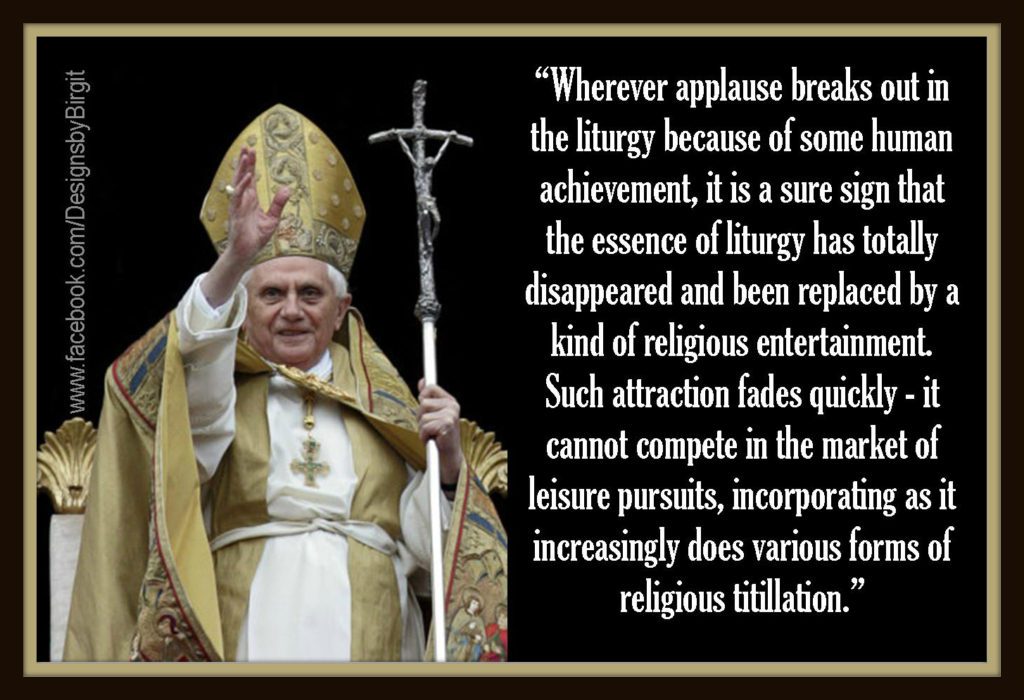
The new pope knows that his task is to make the light of Christ shine before men and women of the world - not his own light, but that of Christ. ~Pope Benedict XVI

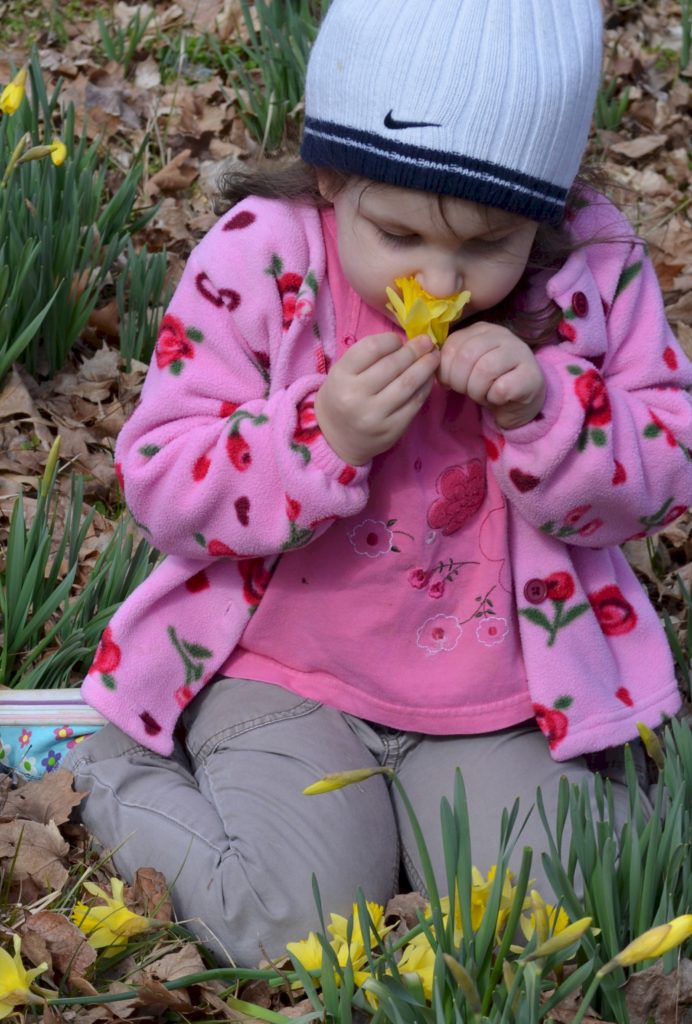
March: Too many children? That's like saying there are too many flowers!


April: Look at the birds of the air; they do not sow or reap or store away in barns, and yet your heavenly Father feeds them.

May: “Blessed are you, Lord God, maker of all living creatures. You called forth fish in the sea, birds in the air and animals on the land. You inspired St. Francis to call all of them his brothers and sisters. We ask you to bless this pet. By the power of your love, enable it to live according to your plan. May we always praise you for all your beauty in creation. Blessed are you, Lord our God, in all your creatures! Amen.”

June: Nature in the garden, a constant source of fascination.

July: Each life is a unique creation of God. Picture the possibility of each one - they are endless!

August: The 'back 40' of our daylily garden in full summer splendor.

September: Mr. Oliver is kind enough to share his pony friends with us.

October: Keeping the Faith for All Hallows Eve - St. Michael the Archangel costume from things around the house. Make it for your child:

November: King, the Belgian, is being retrained to be a carriage horse. He has a bit of practice before the kids can come along for a ride.

December: Advent, an integral spiritual preparation—especially in prayer and fasting—for Christmas.

Bonus shot #13 - Fall fun in the leaves.


Thursday, April 25, 2013

Martha, Mary, Popes and Such: For Everything a Season


This year, the Gospel reading about Martha and Mary struck a different chord for me. I took away something more this time. It's not that one of the sisters was right and the other was wrong, but that – for that moment in time – Mary’s reaction to being in the presence of Jesus may have been the more appropriate. Yet, someone always has to be tasked with the grunt work, if you will, even as there’s also a need to stop and smell the roses – to take in the finer details and absorb them into our very souls. Perhaps, just this once, the meticulous care taken to have the house in order and meal prepared, cost Martha a very precious gift – communing with Jesus and the opportunity to drink in what He had to share. Nonetheless, each woman’s task was a necessity – otherwise, there would have been no household to gather within.

Martha or Mary: Both Roles Have Value


In pondering the way our Church leaders govern, a similar thought came to me. As much as we, as a Catholic people, find comfort in the familiar, sometimes a new way to approach our ancient faith can have its merit as well. Much has been made about the difference between Pope Francis and his most recent predecessor, but when we look to Martha and Mary in this broader way we are spurred to look at the overall picture instead of solely the minor details.

Pope Benedict XVI was a supreme teacher as well as being very shy and modest. His care of the liturgy and its reformation was a very necessary step after the ‘spirit’ of Vatican II led to numerous deviations from what the Mass is and always has been. What started out as a way for the laity to more actively participate in the liturgy, sometimes became the travesty of making the Holy Sacrifice of the Mass a do-it-yourself project for many. That the fault didn't lie with the documents or the council of Vatican II mattered not a whit to those who willfully used the opportunity for their own purposes – or, for that matter, to the people in the pews who were unaware that terrible liberties were being taken. The scholarly writings of Pope Benedict will feed souls for many years to come and his care of the structure of the Mass will help assure its survival.

Pope Francis, as best as can be surmised within the brief time he has been with us, is more outgoing in character. He seems to thrive on being in the company of the people – celebrating Mass in small venues, eating with the workers, and going out into the throngs to press the flesh. His homilies are short and sweet but very much to the point. The Devil is among us, Hell is a reality, and we must love one another as commanded by Jesus. He doesn't couch his words but matter-of-factly shares them as recurring themes. It doesn't appear that he is as concerned about maintaining protocol in the way a Pontiff dresses, where he lives, or how he travels. In my humble opinion, he appears to be a bit more spontaneous.

Martha and Mary: No Wrong, No Right


Like the story of Martha and Mary, however, we find that there is no wrong or right here – there is simply a difference of approach. That both men value the necessity of the rules governing the Church, celebrating Mass, and maintaining an order that ties us back to the very beginning of the Church instituted by Jesus Christ Himself, is evident. The Great Commandment that we love one another, is also very apparent in the lives of both Pope Benedict and Pope Francis. We are commanded to serve one another and that is given priority status by both. Rules cannot be followed at the exclusion of living the Gospel but neither can living the Gospel cause us to throw rules out the window.

What we are seeing here is a difference of approach – because their earthly God-given gifts vary – much like what is spoken of in 1 Corinthians 12. Whether it is an eye, foot, or ear – all are important. We are one body – the Body of Christ – and just like the physical human body has many parts, so does the Church. And all purposes are significant in their own service.

“That there might be no schism in the body; but the members might be mutually careful one for another.

And if one member suffer any thing, all the members suffer with it; or if one member glory, all the members rejoice with it.”

Martha and Mary: Both Are Necessary for the Whole


So we see that there is much more to Luke's Gospel than at first glance. Both Martha and Mary are a necessary part of the equation – they bring their special gifts to procure the accomplishment of the whole. There is a goodness in realizing the right season, the right mission, the right goal at a given time. For, “there is a time for everything, and a season for every activity under the heavens”. It is ours to obey the whispering call as scripture and the Holy Spirit give us what we need - just at the right time. There is a necessity of continued learning and perusal of Gospels, the Word of God and the Catechism of the Catholic Church in order that we might arm ourselves with the proper tools for the proper time. As the cycles of our lives change so does what we take away from reading, prayer, and inspiration. As a very wise priest once told me, “sometimes the result of inspiration is not known until years later”. In the spirit of Martha, Mary, Benedict and Francis let us continue to function as worthy members of the Body of Christ - each doing his own part.

Friday, April 5, 2013

News Flash! The Pope is Catholic

Ever since the resignation of Pope Benedict XVI and the subsequent election of Pope Francis, all of the usual suspects have had a field day. Couched in seemly complimentary reporting of the actions of our new Holy Father, have been snide insinuations that finally, someone in the hierarchy of the Church is getting things right. Sadly, it's not been a practice isolated to haters of all things Catholic or poorly informed reporters. Some men and women in the pew have also fallen for the rhetoric - some of which has been perpetrated by professional Catholics and clergy. Everywhere you look, there he is, Pope Francis being - gasp - a Catholic! Well news flash, the pope is Catholic and all of those photo opps that are being so carefully thrust in the forefront of our news reports and Facebook wall feeds simply portray him acting in a manner that has been consistently practiced since Jesus initiated His Church.

Sure, Pope Francis has a certain style all his own - he eschews formality for the more simple. His Jesuit roots show, just as the professorial style of Pope Benedict XVI was evident during his reign. What isn't different is that all Catholics are bound by the Great Commandment - that we love one another. Whether in scripture, homily or practice, that has always been the case. After all, a highly significant number of the schools, hospitals and charities originate and are run by the Church - all over the world. That's something that has been going on for decades - centuries, really.

So what is it about our current state of affairs, that makes compliments to Pope Francis into insults to his predecessors (especially the past two)? One obvious answer is that the secular world (and poorly catechized Catholics) are always looking for a chink in the armor of the Church. These disgruntled folks seek to force the Church to conform to their ideology rather than taking up the teachings instituted by Christ Himself. There seems to be a lot of projection and wishful thinking going on. I find it puzzling that someone would seek to remain in a church with which they have grave disagreements, and attempt to change her, rather than becoming a member of a more like-minded church. And, let's face it, there are tens of thousands of man-instituted options out there!

Of course another persistent threat is from Satan himself, who prowls about creating mischief. What better way to discourage unity within the ranks of Catholics than to sow doubt by casting light on poorly conceived comparisons. Isn't it possible that we are simply given just the right man, as our Vicar of Christ, at just the right time - by the inspiration of the Holy Spirit? And in order for one Pope to be just what the Church needs, do those who came before him have to be discredited? I think that it's much more realistic to look at them as trail blazers - each for the one to come after him.

I've seen so many poorly rationalized comparisons in these scant two weeks - enough to make my head spin. Wouldn't it be better for us all to recognize that each of us is divinely created with our own unique gifts? Isn't that what we are admonished to do for each individual gracing this earth? Why then, not do the same for these men of God? They each have their gifts to share with the world - because even non-Catholics and non-believers are impacted by the man in the Vatican. Pope John Paul II gave us the New Evangelization and taught us about the dignity of all humans -  unto death. Pope Benedict XVI moved us toward reviving the liturgy and a renewal of faith - the Year of Faith. Likewise, Pope Francis will share his unique gifts with the world during his reign. One thing doesn't change, however, the truth as illuminated by God. The Church, through our priests, gives us access to Christ Himself - Body, Blood, Soul, and Divinity. Wouldn't it be a shame to detract the purpose of our existence? Shouldn't we focus on Divine Truth rather than human misconceptions?

--US Catholic Church statistics can be found here.

Thursday, March 14, 2013

Good-Bye, Hello - Viva il Papa!


Am I the only one who is feeling a bit unfaithful right now? Perhaps a bit divided? Don’t get me wrong, I am elated at the election of Pope Francis and the blessing he appears to be to our Church. His modesty and low maintenance style is very appealing. The positions he has historically held on the moral issues I hold dear are spot on from what I have learned about him in the past two days. But what about dear, sweet, unassuming Benedict? Unlike other past popes, he has not yet gone to his Eternal Reward. He still lives – albeit solitarily – amongst us. Our gentle German Shepherd did so much for Holy Mother Church during his eight year pontificate – not to mention, the time he spent serving as Cardinal Josef Ratzinger.

OK, I’ll admit that his German heritage always appealed to me. His way of analyzing and explaining felt like my German Opa counseling me in the ways of the Faith. I will also be eternally grateful for what I suspect is a deeper framework for the future of Christ’s Church than we will ever realize. Even the election of Cardinal Jorge Bergoglio may have Benedict's fingerprints on it. But what do we do about Benedict now? He still occupies a warm place in my heart and even as I work feverishly to get to know Pope Francis, I still hear the echoes of what Benedict has taught us ringing in my soul.

Is this how it feelswhen an adopted child finds her birth parent(s)? That feeling of split loyalty - OK, I know where my loyalty lies, but you know what I mean, right? How does one negotiate the roadways of affection, loyalty and love for two of something? It will be interesting to see. Now that the mystery has been revealed, and we know who will be serving as the Vicar of Christ, life can begin to normalize a bit. Sure, we have much to learn about our new Pope, but we still have much to glean from what his predecessor has gifted to the world. Therein lies the beauty of the Church instituted by Christ Himself - a succession of earthy Shepherds to lead us Home. May we find an equitable place in our hearts for them both. Viva la Papa – past and present!

Monday, March 4, 2013

Emergency Contraception: Science and Morals


This is a guest post by my daughter  Erika, a forensic biologist, who writes for Catholic Sistas. The post,  Emergency Contraception Science and Morals first appeared there. 

Recently the news contained two slightly misleading headlines: “German bishops say morning-after pill is ok in rape cases,” and “Top Vatican official calls German bishop’s approval of morning after pill ‘exemplary’”. On the surface both of these headlines give the appearance of the Church, specifically the German bishops and even the Pontifical Academy for Life, reversing a historic ban on contraception and abortifacients. In all likelihood, the Church will be taken to task over this seeming reversal without a closer inspection. However, as a scientist (molecular biology degree and 9 years as a Forensic Biologist) as well as an apologetics hobbyist, I decided to delve a little deeper into both the science and the morals of emergency contraception (EC).

First, the science… I first looked at the article from Contraception that was referenced in both articles in contention. After reading the entire article, the take-home message appeared to be that a Copper IUD is the most effective EC because it disrupts fertilization as well as implantation, but the two hormonal types of EC were ineffective because their action was to disrupt fertilization not implantation. Another article continues the assertion that one of the most common EC types (Levonorgestrel/Plan B) has no effect on implantation. However, as Catholics (as did most people before IVF and recent political mumbo-jumbo), we believe that life begins at conception not implantation. Further review of journal articles yielded this one that clearly states that only people who believe “implantation or later events to be the beginning of pregnancy” consider this method to be non-abortive. Another article, questions the validity of the data used to verify whether Plan B acts pre- or post-implantation without even referencing (in the abstract) whether these studies even consider post-conception and pre-implantation actions.

Most/many studies discount the five to twelve days between fertilization to implantation. It is not a stretch to consider these studies flawed for neglecting this time period; therefore, it is impossible to separate the contraceptive from the abortive properties of Plan B (and other ECs) without further research. Even one of their own, James Trussell, admits the abortive effect must be mentioned to women when giving Plan B. Further, Dr. Trussell admits that for Plan B (or any EC) to be effective, it must have an effect after fertilization. At this point, there is no accurate widely available test for fertilization, although a fertilization chemical has been known since 1979. Common tests used to detect pregnancy are detecting implantation (hCG) hormones, again discounting the five to twelve days between fertilization and implantation.

Now for the morals… In 196820002008, and well, basically forever the Church’s official stance has been against both contraception and abortion. Every life that begins is God’s gift to the bearer. While in cases of rape and incest, it is common to think of the new life as a “punishment”; in reality, God has created something wonderful out of a horrible crime. It is widely believed that punishing a child for the sins of the father is wrong. Therefore, it is no stretch to think that terminating a pre-born child for the sin of the father is wrong as well.


The German bishops, in their ill-conceived notion of “kindness” for a woman impregnated by an attacker, draw a line that neither science nor morality can draw. Studies have not shown that emergency contraceptives only act prior to fertilization. Nor are there widely available reliable tests to determine fertilization, only implantation. Moral law is the same for all life, whether the result of rape, incest, fornication, marital love, marital infidelity, IVF, or any other mechanism. A new life begins when egg and sperm meet (fertilization). Intentionally terminating that life is against the moral code and natural law. When clarification of this media circus is made, I’m sure it will be buried under new Catholic controversy if it is even presented at all. Until then, I am confident that Christ’s Church on Earth remains the most steadfast protector of life from its very conception.

ADDENDUM: In researching this story I could have added this extra explanation:
A comment on Facebook mentioned that since 1999(?), the bishops’ statement has been that if ovulation and fertilization can be proven to have not occurred, emergency contraception is OK. This information is true-EXCEPT-it is almost impossible for medical science to prove without a doubt that no ovulation or fertilization has occurred or is likely to occur during the emergency contraceptives life span in the body. They can test for ovulation-yes-but since sperm cells can live up to a week in the female reproductive system, proving no ovulation at the time the drug is administered does NOT necessarily mean ovulation will not happen within that week. If ovulation occurs within the week life-span of the sperm cells, fertilization can occur. At this time, there is no test for fertilization that is widely-available or widely-used. The current pregnancy tests actually test for implantation. Implantation happens between 5-12 days AFTER fertilization/conception/creation of new life. One of the only ways, in my opinion and research, to have the best chance of knowing whether ovulation and/or fertilization is possible is if a woman uses NFP to chart her cycles. However, even though NFP has a thoroughly proven track record, occasionally “unplanned” conceptions happen even to experienced practitioners.


Thursday, February 28, 2013

Navigating the Uncharted Waters of Pope Benedict’s Resignation - Some Fun Q & A

The final Angelus - 24 February 2013. 


So, we've had 16 days to accustom ourselves to the retirement of Pope Benedict XVI, our 266th pope in the line of succession beginning with the Rock, St. Peter. By now most of us have shaken off the fog of shock and have taken a more resolute pose. As the leader of the world’s 1.2 Billion Catholics, however, Benedict’s unusual step has left us as quite the Papa-ratzi. News reports by the dozens appear hourly to feed our need to know. What will we call him, where is he going, and what about that all important Twitter account with its 1,582,730 followers? For that matter, what about those indulgences that we obtain for praying for the intentions of the Holy Father when we have no sitting Pope? In an effort to answer some of the questions that have caught my fancy, I will share some answers and their sources.

Q: Since this is an unprecedented occurrence in modern times, what in the world shall we call him when he leaves?

A: His Holiness, Benedict XVI, Bishop Emeritus of Rome will be his new title according to both Patheos and Zenit.

Q: What changes has he made to the rituals for new pope's inauguration?
A: "One of the most visual changes, he said, would be the restoration of the public "act of obedience" in which each cardinal present at the pope's inaugural Mass comes forward and offers his allegiance."

Q: So what will he be doing after 8:00 p.m. (Rome time), February 28, when he steps away from the Seat of Saint Peter?

A: According to his own words, "I, retired in prayer, will always be with you, and together we will move ahead with the Lord in certainty. The Lord is victorious." After a brief stay at Castel Gandolfo, the Papal summer home, he will dedicate himself to a life of prayer and study in a Vatican-based monastery.

Q: But isn’t he abandoning the Church at a very tumultuous time?

A: No, Benedict is not abandoning the Church. Perhaps in anticipation of this question he clarified, “…this does not mean abandoning the Church,” he qualified. “Indeed, if God asks me this it is just so that I can continue to serve with the same dedication and the same love with which I have done so far, but in a way more suited to my age and for me.”

Q: What about the indulgences that are obtained by those who pray for the Intentions of the Holy Father when we have no sitting Pope?

A: Surprisingly, the answer is yes! According to a post by Fr. Zuhlsdorf, "The faithful are able to obtain plenary indulgences during the “Sede Vacante” time, where there is no Pope.As a matter of fact, the Church holds matters of internal forum and of indulgences to be so important for the faithful that the office of the Major Penitentiary (who oversees these matters for the Apostolic Penitentiary) is one of the few that does not cease when the Pope dies or resigns".  Actually, this question was addressed after the death of Pope John Paul II after his death in 2005.

Q: Doesn’t this move us closer to the Prophecy of St. Malachy and his list, where he predicts that Benedict XVI’s successor will be the last pope? Are we to conclude that we are nearing the end?

A: There are strong indications that the List of St. Malachy is a fraud. According to Catholic Answers, “(t)he consensus among modern scholars is that it is a 16th-century forgery created for partisan political reasons”. We must remember that predictions of the end times were warned against in the Bible..."but of that day or hour no man knoweth, neither the angels in heaven, nor the Son, but the Father".

Q: Will the conclave begin earlier, shortening the expected month long wait, and how many Cardinals will participate?

A: In his motu proprio Normas nonnullas (22 feb 2012), Pope Benedict has given authorization for the conclave to begin earlier. Sources at the National Catholic Register report that “the conclave to choose the next pope will likely begin between March 9 and 11”. We may have a new pope by Easter! This decision, however, now “falls squarely within the pontifical provisions for a conclave, and one may leave the choice of a start-date to the competent authority without further concern for the legality of the assembly” according to canonist Ed Peters.
There will be 118 Cardinals in the conclave.

Q: Will the virally popular Papal Twitter account, @pontifex, be shut down when the Holy Father steps down?

A: In a word, no. It will go dormant while we await the election of our new pope, however, as soon as he steps into his role as Vicar of Christ he will be free to take up what his predecessor started. It appears that Benedict chose the name "Pontifex"  wisely, in anticipation of a seamless transition from pope to pope. The name means "bridge builder" or "pope" .

This is but a small sampling of the questions that have arisen since Pope Benedict XVI made his announcement. Catholic Sistas (CS) is also involved in a Q & A endeavor over at Electing the Pope. Here you will find many more questions and answers, with sources, some of which are being provided by Ink Slingers. You will also able to post questions of your own.

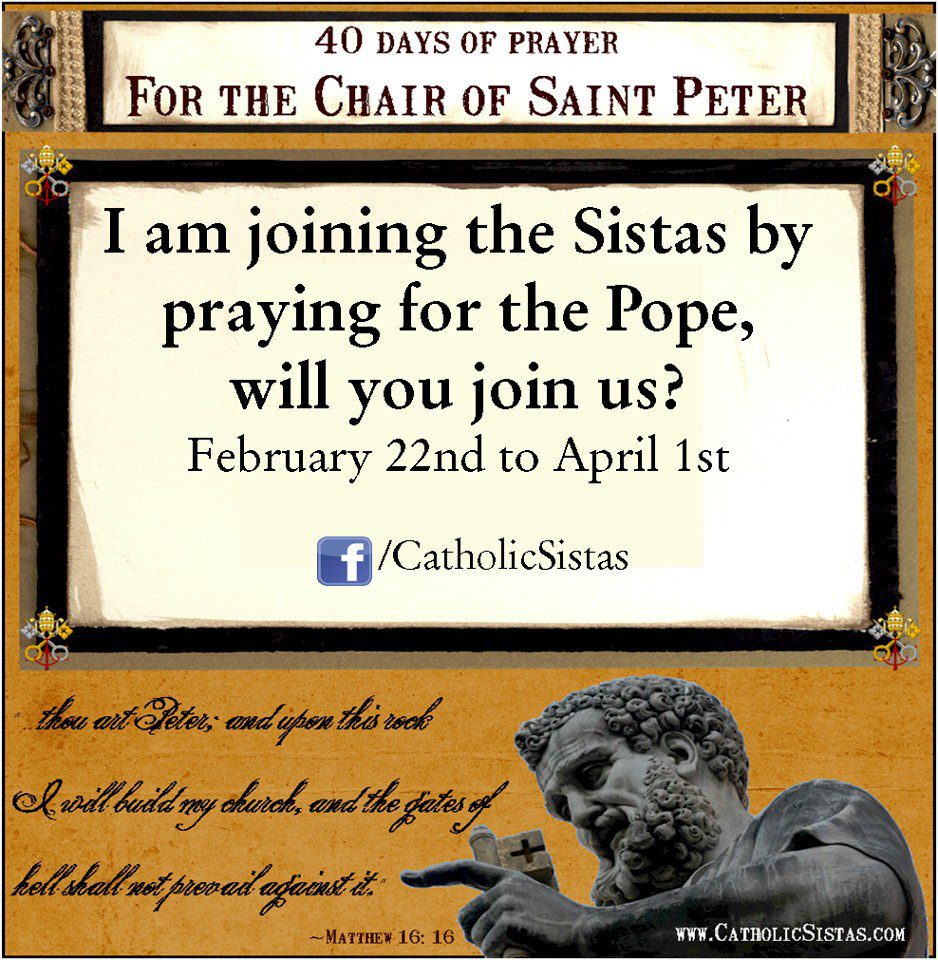
40 Days of Prayer for the Pope
Don’t forget that CS also has their 40 Days of Prayer for the Seat of Saint Peter posted on our Facebook fan page. There we post a brief prayer every day – from February 22 (Feast of the Chair of Saint Peter) through April 1. Won’t you join us in praying for Pope Benedict XVI and his successor? 

You might also be interested in reading our Open Letter to Our Beloved Papa, where the Ink Slingers share their thoughts, prayers, and admiration of this wonderful pope who has given us so much in his eight years as our Pontiff.

May we never forget the good done by this gentle German Shepherd of ours!

The post Navigating the Uncharted Waters of Pope Benedict's Retirement appeared first on Catholic Sistas.

Thursday, February 21, 2013

The Bells and Smells of Mass – Why Our Senses Matter When We Worship


Our senses enhance our livesWe are "fearfully and wonderfully" made by God and His crafting of us is undeniably intricate. Our five senses give us a plethora of experiences with which to enjoy all of His creation. Our immediate surroundings provide much in the way of sensory pleasure – to the point that we often take them for granted. Similarly, our senses can also propel us back in time, where we are able experience past pleasures anew. Take a favorite song, for instance. A few musical notes and we are transported back in time – to our first love, senior prom, or a delightful vacation. We also relate to the memories evoked by the smell of a freshly baked apple pie or a favorite recipe – like Mom used to make. Even realtors have been known to employ this tendency to lure prospective buyers into a feeling of having ‘come home’.

In the same vein courting, celebrating special occasions or getting married, finds us taking great pains to entertain our senses . And what potential boss would we impress if we appeared for an interview in tattered jeans and a stained tee shirt? Would a suitor give us a second glance if we had unkempt hair and bad breath? Meanwhile we powder, lotion, and dress our babies in adorable outfits in an effort to enhance the velvet touch of their skin,  intoxicating scent, and cherub's form.


In the same vein courting, celebrating special occasions or getting married, finds us taking great pains to entertain our senses . And what potential boss would we impress if we appeared for an interview in tattered jeans and a stained tee shirt? Would a suitor give us a second glance if we had unkempt hair and bad breath? Meanwhile we powder, lotion, and dress our babies in adorable outfits in an effort to enhance the velvet touch of their skin,  intoxicating scent, and cherub's form.
As sensory creatures, the gift of our senses helps us experience the fullness of God’s creation. Therefore, our senses also come into play in our worship of God. We have at our disposal, many ways that we can both compliment our understanding of our ancient Liturgy and to show honor to God.

  • The architectural beauty of our churches illustrates that we have entered a sacred place. The formality of the edifice and the orderly ranks of pews speak to a certain structure and discipline.
  • Ornate statuary and the Stations of the Cross call to mind the faithful lives of saints, the virtues of the Blessed Mother, and the God Man, Jesus - who came to take away the sins of the world. And we see the crucifix as a poignant reminder of the ultimate price paid for our sins – both past and future.
  • The various colors of the priestly vestments give us a clue as to the season and the tone of our worship. White, red, green, violet, black, rose and gold all denote differing liturgical seasons, purposes or intents.
  • The Rubrics or General Instruction for the Roman Missal (GIRM) are a written manual that thoroughly choreographs postures, words, and actions during Holy Mass. In addition,  the Roman Missal itself provides the details of the words and actions of the celebrant (priest) during Mass by allowing him to simply ‘say the black, do the red’, as Fr. Zuhlsdorf of blogdom fame is fond of asserting.
  • The hymns, composed and chosen, illustrate what we believe, that we should do our best to raise our voices in His glory, and that we are there to sing His praises - not our own. If it becomes a concert or a prideful show of talent, we diminish this God-given gift that we are offering back to Him in song. It becomes about us and not about true worship. Our Holy Father, Benedict XVI has written some enlightening words concerning the Liturgy and Sacred Music in his book, The Spirit of the Liturgy.Our senses matter at Mass as well
  • Although they are an option (according to the priest’s preference), when they are used the bells at Mass gloriously appeal to our ears as a signal that something very special is happening. They announce that we should be still and turn our rapt attention to the greatest sacrifice ever made – Jesus giving His life for our sins and Himself to us as food. That we are once again at the foot of the cross – with Him!
  • Used frequently in the Latin Mass or during special times in the Novus Ordo, incense tickles our noses and captures our attention, both through smell and sight. As the smoke rises, our minds are drawn to the prayers ascending to Heaven in praise, petition, penitence and worship.
  • The clothing with which we choose to cover ourselves speaks to our recognition of appearing before our King, the Lord of Lords. As in the parable about the wedding garment, dressing for the occasion speaks to the reverence we feel, the homage we pay, and the respect that is demanded by merely existing in His presence. Veiling is also an optional, special acknowledgement of a woman's humility and the gift of femininity. These efforts are not about finery but about putting our best foot forward to the best of our ability.

These and other manifestations of our senses are of greater importance in our worship than we sometimes acknowledge. Yet we have been given a perfect example, both in scripture and Tradition. Reverence for the House of His Father, certainly mattered to Jesus. The Catechism of the Catholic Church tells us that,
“Jesus went up to the Temple as the privileged place of encounter with God” because “for him, the Temple was the dwelling of his Father, a house of prayer”.  When he saw the lack of decorum shown by the sellers and money changers, “he was angered that its outer court had become a place of commerce”. As He drove the merchants out He said, "You shall not make my Father's house a house of trade”. We are further told that his apostles retained their reverence for the Temple even after the Resurrection.

Of all of our actions in life, prayer and pleasing God our Creator should stand above any other pursuit. How much more important than any other quest is our approach to the sacrificial altar? What are our actions saying when we take the glory and worship of our God in vain? Do we present ourselves grudgingly or carelessly for that brief hour each week? Or are our efforts fitting and pure? Perhaps we could become more aware and make some improvements during Lent. How will we show our respect and honor for Jesus in the Holy Sacrifice of the Mass? Will we inspire a new outward sign of reverence that will carry over past Easter? Do you see any actions in particular that speak to you in relation to the dignity given to our Sacrificial Lord? Share your thoughts and experiences with us so that we may learn from one another.

Of course, good example, also gives a ripple effect to those around us. Once the ripple covers our own little pond, it moves on to other ponds, rivers, and lakes. Good behavior, as well as bad, has been known to be contagious! Why, you might ask, are all of these things so darned important? The answer? Obedience, humility and most importantly R-E-S-P-E-C-T. For more insight, it might be helpful to read this most informative post, Save the Liturgy, Save the World, by Fr. Zuhlsdorf for an explanation much better than my own. God bless and Catholic on!

Monday, February 11, 2013

Pope Benedict XVI to Step Down - The Signs Were There

The historic news of the resignation of Pope Benedict XVI came as a surprise to laity and Church leaders alike; he will be only the 5th pope to do so, in the history of the Church founded by Jesus Himself. Faithful Catholics had reveled in the firm yet gentle reign of our German Shepherd as he worked diligently to reform the reform of the Church. The reversion back to a more accurate translation of Mass responses, prayers, and form was met with a tepid response by modernists but those of us who take pride in our ancient practices were heartened to have more solemnity and reverence reintroduced into the living sacrifice that is the Holy Mass. As a German myself, I felt a kinship with Papa Benedict and found myself smiling and nodding whenever he spoke or wrote about all things Catholic.


He was also a staunch protector of the unborn and reiterated time and again the supreme importance of the sanctity of life. As a pro-life advocate, I found myself frequently quoting a never ending supply of his pronouncements on the subject. The poor and forgotten were also consistently championed by him as were all people, regardless of religious affiliation. He worked tirelessly and traveled extensively with no regard for his personal safety or comfort but was greeted with joyful welcome wherever he went. I prayed, on a regular basis, that he would be with us for many years to come, as I saw the Church begin flourishing in renewal under his reign.

What we are seeing in retrospect, however, is that there had been clues to be found, pointing toward this unusual step he has taken. On April 29, 2009, few pundits or faithful took particular notice when Pope Benedict visited the tomb of Pope St. Celestine V in Aquila, Italy. Celestine was a rather obscure medieval Pope, whose reign began in 1294. As was the case with Josef Cardinal Ratizinger (aged 78 at the time of election), Fr. Pietro Angelerio was a devout and holy priest who was also reluctant to become Pope at an advanced age (he was 80). In fact, just a brief five months after his election, Pope Celestine V issued a formal decree that allowed popes to resign. Shortly afterward, he exercised that right.


We can now look back and remember that Pope Benedict XVI prayed and then left his palluim on top of Celestine’s tomb. The leaving of the symbol of his episcopal authority as Bishop of Rome appears to have had significance that was lost on the world at the time. Additionally, he went out of his way to visit and pray in the Cathedral of Sulmona fifteen months later. There reside the relics of the same St. Celestine V. It would be a stretch to attribute these actions as mere coincidence, given today’s news, since they point toward a spiritual journey leading to his decision to step aside. Considering Pope Benedict’s analytical style of thought and his thorough attention to detail gives these actions new meaning in light of the announcement made today. Although the obvious symbolism is not lost to us, we now see a deeper more profound intent come to light. Pope Benedict XVI was signalling his intention to resign and the minor rumors that had arisen a few months prior, bear more weight now that his decision has been announced.


On a very human level I feel bereft, as if some indispensable member of my family is moving far away.This pope, with his gentle yet firm hand, has been one to whom I could relate so well. Our German Shepherd’s words and writings resonated with me as if he were my own Opa (grandfather). I love him with a depth that surprises me and pray that the twilight of his years will be spent in the peace that comes from a job well done. He has served us well and his toil for the people of God will stand the test of time. Well done, good and faithful servant. You have given me the gift of a deeper faith and a stronger determination for serving the Church founded by Christ Himself. ‘And the gates of hell will not prevail against her!’. Vielen Dank und möge Gott Sie segnen*.


‎”After the three days of darkness, St. Peter and St. Paul, having come down from Heaven, will preach in the whole world and designate a new Pope. A great light will flash from their bodies and will settle upon the cardinal who is to become Pope. Christianity, then, will spread throughout the world. He is the Holy Pontiff, chosen by God to withstand the storm. At the end, he will have the gift of miracles, and his name shall be praised over the whole earth. Whole nations will come back to the Church and the face of the earth will be renewed. Russia, England, and China will come into the Church.” (Prophecy of Blessed Anna Maria Taigi (1769-1837 A.D.) who was Beatified by Pope Bendedict XV in 1920.)

*Many thanks and may God greatly bless you!

This post first appeared on the Catholic Sistas blog.